Enrichment-Driven Boutique Boarding: A Safer Choice Than Large Kennels
That little pang of guilt before a vacation—we all know it. You’re packing your bags, dreaming of relaxation, but your dog is watching with those big, knowing eyes. The biggest question looms: “Where will they be safe, happy, and genuinely cared for while I’m gone?” It’s a valid concern, because the truth is, not all dog boarding facilities are created equal. The difference between a large, traditional kennel and an enrichment-driven boutique facility isn't just about size; it's a fundamental difference in philosophy, safety, and your dog's emotional well-being.
For years, the standard was simple: a place to contain dogs. But as our understanding of canine behavior has deepened, so has our standard of care. We now know that a dog’s mental and emotional state is just as important as their physical safety. This is where the model of enrichment-focused boarding shines, offering a profoundly different—and safer—experience. Let's break down the science behind why a boutique approach is often the best choice for your furry family member.
What Really Happens at a Large, Traditional Kennel?
To understand the benefits of the boutique model, we first need to look honestly at the environment of many large-scale, traditional kennels. While often run by well-meaning people, their model is typically built around logistics and volume, which can inadvertently create a high-stress environment for the very animals they’re meant to care for.
The Environment: A Symphony of Stressors
Picture a typical large kennel: long hallways lined with concrete or chain-link runs. The acoustics are often poor, meaning every bark, every clang of a gate, echoes and amplifies. For a dog, whose hearing is far more sensitive than ours, this constant, high-decibel noise is incredibly stressful. There are often minimal visual barriers, so dogs are constantly seeing other dogs—many of whom are also stressed, barking, or pacing. This lack of a private, quiet space to decompress is a major contributor to anxiety.
This phenomenon is known as trigger stacking. A single stressor (like being in a new place) is manageable. But add in the loud noises, the sight of dozens of strange dogs, unfamiliar smells, and a new routine, and the triggers stack up. A dog’s stress hormone, cortisol, rises and remains elevated, putting them in a constant state of fight-or-flight. This can lead to behavioral issues like frantic barking, reactivity, loss of appetite, and even illness.
The “All-Day Play” Trap
Many large facilities market “all-day play” or “cage-free” environments as a major perk. It sounds great in theory—who doesn’t want their dog to play all day? In reality, this is one of the most misunderstood and potentially dangerous practices in the dog care industry.
Dogs, like young children, are not built for non-stop, high-arousal activity. In the wild, canids spend the vast majority of their day resting, conserving energy between short bursts of activity. Constant play prevents crucial downtime for both physical and mental recovery. Without mandated rest periods, cortisol levels skyrocket. An overstimulated, overtired dog is more likely to become irritable, anxious, and unable to make good social decisions. This is when scuffles and fights break out. A dog who may be perfectly social in short, supervised bursts can become reactive and overwhelmed after hours of relentless stimulation. They return home not just tired, but utterly frazzled and behaviorally drained.
The Boutique Dog Boarding Philosophy: Quality Over Quantity
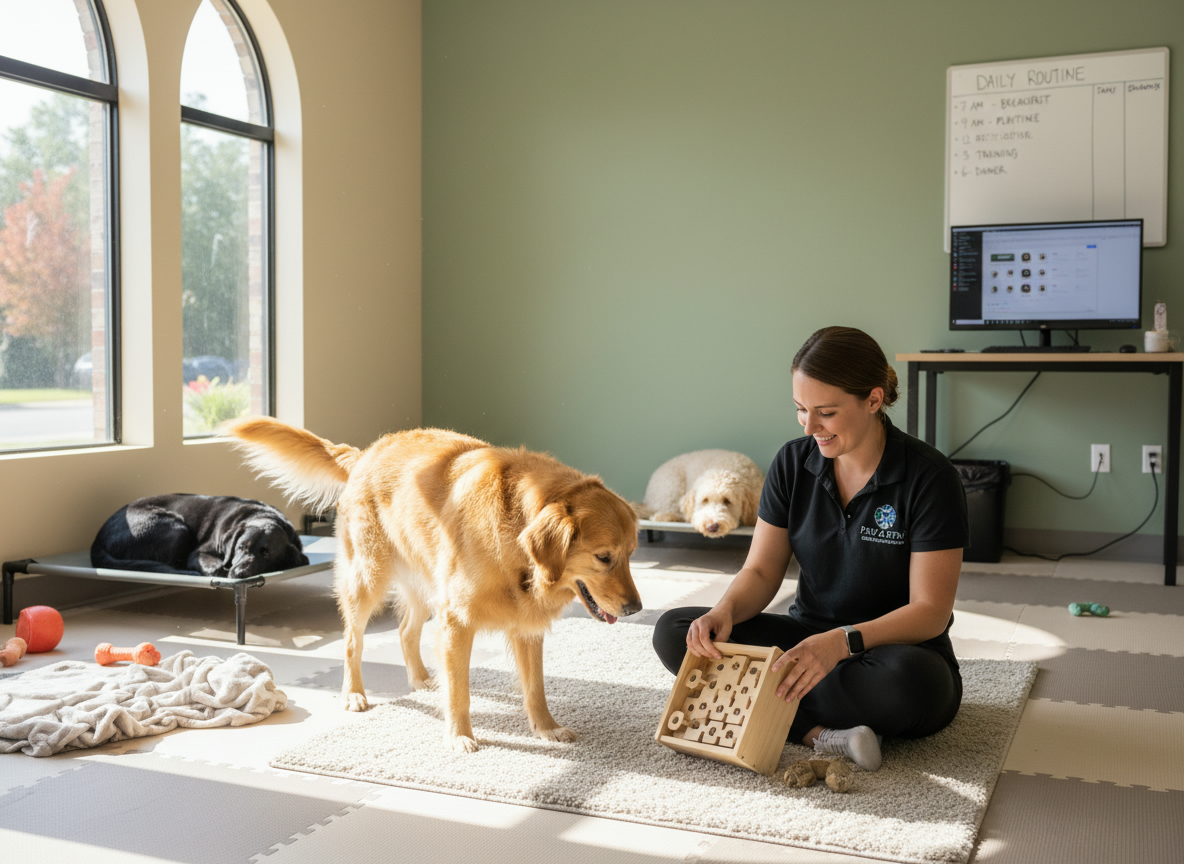
Enrichment-focused boarding facilities, like The Canine Outpost, operate on a completely different principle. The goal isn't to manage a large volume of dogs; it's to provide a high-quality, individualized experience that supports each dog's emotional and behavioral health. This approach is built on three core pillars: structure, enrichment, and safe socialization.
The Power of a Structured Routine
Dogs thrive on predictability. A structured day that includes balanced periods of play, learning, meals, and rest drastically reduces anxiety. At a boutique facility, a dog's day isn't a free-for-all. It might look something like this:
- Morning: Potty breaks followed by a structured group play session.
- Mid-day: Lunch served in their private space, followed by a quiet enrichment activity (like a frozen KONG or lick mat) and a mandated nap time. This allows their brains and bodies to rest and recover.
- Afternoon: Another supervised play session or a one-on-one activity.
- Evening: Dinner, a final potty break, and quiet time to settle in for the night.
This routine mimics a healthy home life and gives dogs a sense of security. They learn what to expect and when, which allows them to truly relax and enjoy their stay.
Enrichment-Focused Boarding: A Workout for the Brain
Enrichment is the heart of the boutique model. It refers to activities that allow dogs to engage in their natural behaviors—sniffing, chewing, licking, and problem-solving. It’s about more than just physical exercise; it’s about preventing boredom and engaging their minds. Mental fatigue is just as important as physical fatigue for a happy, balanced dog.
Examples of enrichment include:
- Puzzle Feeders: Making dogs work for their food taps into their natural foraging instincts.
- Scent Work: Hiding treats around a room for them to find engages their most powerful sense—smell.
- Lick Mats & Frozen Treats: Licking is a self-soothing behavior that releases calming endorphins.
- Confidence-Building Activities: Navigating simple obstacles or learning a new trick builds self-esteem.
These activities help lower cortisol, reduce stress, and give dogs a fulfilling sense of purpose. A dog who has had a good mental workout is a calm and contented dog.
Safer Socialization: Curated Playgroups
Unlike the “all-day play” model, a boutique facility focuses on creating small, carefully managed playgroups. Dogs are assessed for their temperament and grouped based on size, age, and play style. A rambunctious young Labrador isn’t thrown in with a shy senior Beagle. Staff are not just supervisors; they are trained referees who understand canine body language. They can spot the subtle signs of stress—a lip lick, a yawn, a “whale eye”—and intervene *before* a situation escalates. Play sessions are kept shorter to ensure they remain positive and fun, ending before dogs become overtired and cranky.
Why Fear Free Care is a Game-Changer for Safer Dog Boarding in Turlock and Modesto
Perhaps the most significant differentiator is the commitment to low-stress, or Fear Free care. This professional certification and philosophy is dedicated to preventing and alleviating fear, anxiety, and stress in pets during every interaction.
Understanding and Responding to Your Dog's Needs
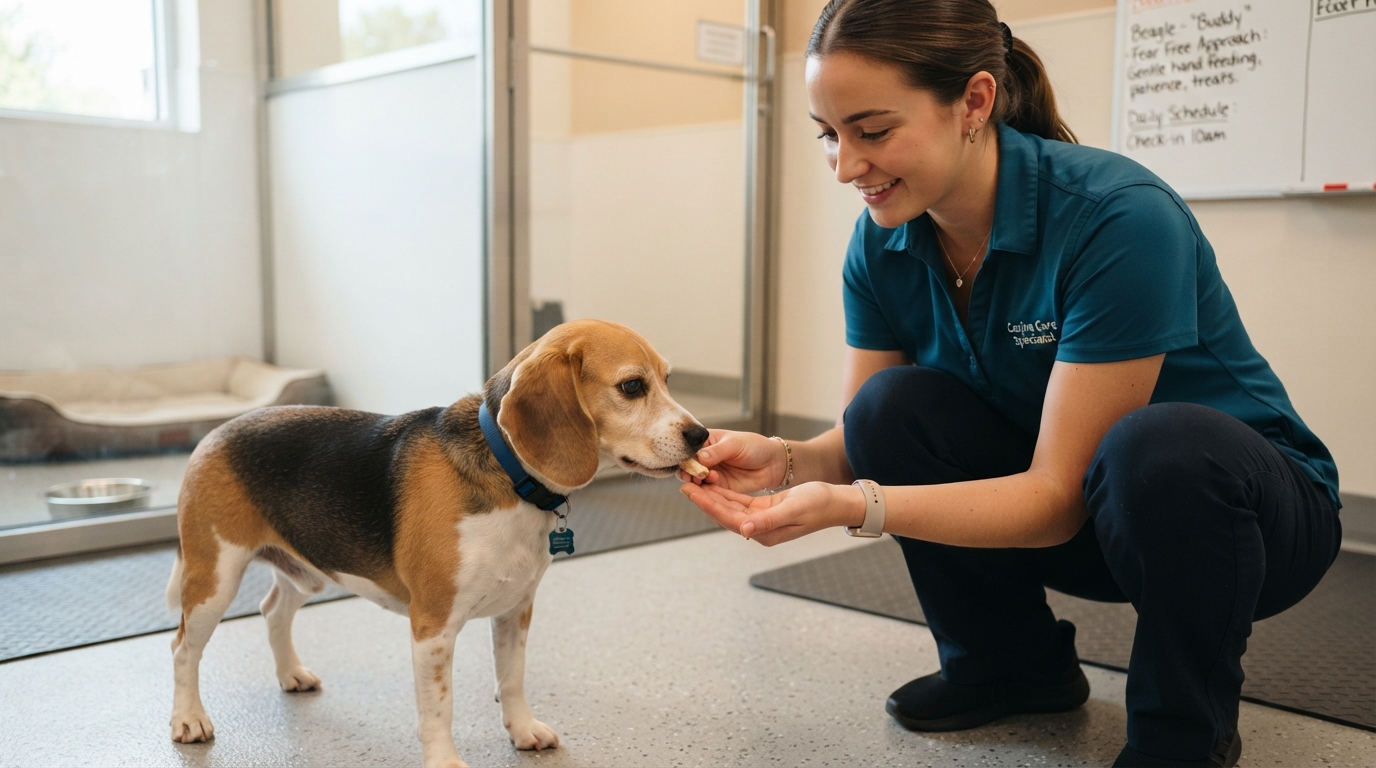
In a large, loud kennel, a dog’s subtle stress signals are easily missed. A fearful dog hiding in the back of their kennel might be labeled “stubborn” or “shy.” At a Fear Free-focused facility, that same behavior is correctly identified as a sign of anxiety. Instead of forcing the dog out, a trained handler will use techniques to build trust. They might sit quietly outside the kennel, toss high-value treats inside, or offer a soothing lick mat to create a positive association.
This compassionate approach extends to everything from moving dogs between spaces to mealtimes and handling. The goal is to give dogs a sense of choice and control over their environment, which dramatically reduces their fear. This is what transforms a potentially scary experience into a positive one, ensuring your dog is not just tolerating their stay, but actually enjoying it.
How to Choose the Right Boarding Facility for Your Best Friend
When you're looking for a place for your dog, you are their advocate. It's crucial to ask the right questions to understand the facility's philosophy and practices.
Key Questions to Ask Any Facility:
- What is your staff-to-dog ratio in playgroups? (A good ratio is typically around 1 staff per 15 dogs, or lower).
- Can you describe a typical dog's daily schedule? Is there mandated rest time built into the day?
- What specific types of mental enrichment do you provide beyond group play?
- What training or certifications does your staff have in dog body language, group management, or Fear Free handling?
- How do you introduce new dogs to a playgroup? What is your temperament evaluation process?
- What is your protocol if a dog is showing signs of stress or is not enjoying the group environment?
Red Flags to Watch For:
- Vague answers or a focus solely on “we play all day long!”
- An emphasis on sending your dog home “exhausted” without mentioning mental stimulation or rest.
- No formal temperament test before allowing dogs to interact.
- Large, chaotic playgroups with minimal staff intervention.
- Staff who cannot clearly explain common dog stress signals.
The Canine Outpost Promise: A Safer, Happier Stay
Choosing where to leave your dog is a big decision. While a large kennel might seem adequate on the surface, an enrichment-driven boutique facility provides a fundamentally safer and more emotionally supportive environment. By prioritizing structure, mental engagement, safe socialization, and Fear Free care, we go beyond simply housing your dog—we nurture their well-being.
You deserve to enjoy your time away without worry, confident that your dog is not just being watched, but is being understood, respected, and cared for as an individual. For pet parents in the Turlock and Modesto area seeking a truly stress-free boarding experience, this modern approach offers peace of mind and a happy, healthy dog who is excited to come back and visit.